Why a Lid Changes the Pace of a Simmer
A lid changes the pace of a simmer by trapping heat and moisture; learn when to cover, crack, or uncover a pot for the texture you want.
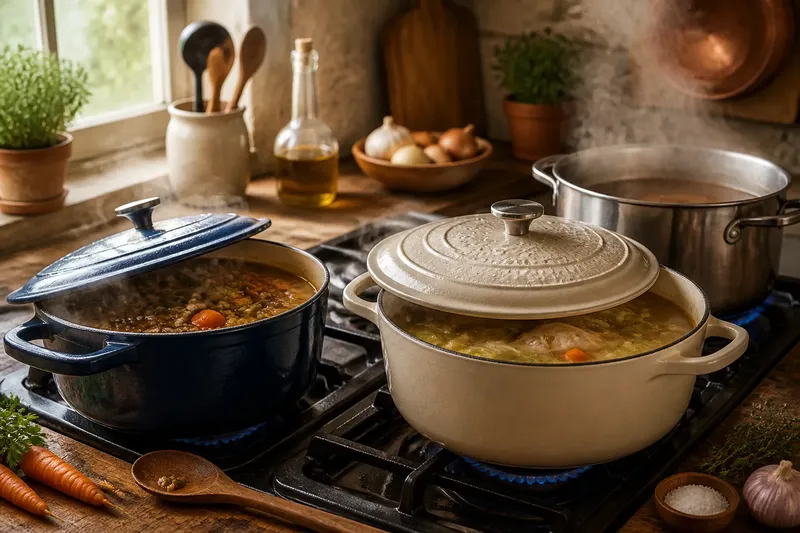
A pot of chicken soup is quietly bubbling, but the carrots still feel firm and the broth is thinning faster than expected. Reaching for the lid changes more than the view: a cover holds warmth and water vapor close to the food, while an open pot lets both escape. Understanding how a lid changes the pace of a simmer helps you choose whether to cover, crack, or uncover the pot for the result you want.
What changes when you cover a pot?
With a lid on, steam rises from the liquid and meets the cooler underside of the cover. Much of that vapor condenses and drips back into the pot. The surrounding air stays warm and humid, and less heat escapes from the surface. A covered pot can therefore maintain a gentle simmer with less burner input than an open one, though the exact response depends on the pot, lid, stove, and amount of food.
An uncovered pot exchanges heat and moisture more freely with the kitchen. Water vapor leaves, carrying some heat with it, while the liquid at the surface evaporates. That loss concentrates what remains, which can deepen a sauce or soup’s flavor, but it can also leave the pot drier than intended.
A lid does not set the simmer for you. A strong burner can still drive a covered pot into a vigorous boil, and a loose-fitting lid may let plenty of steam escape. Watch the liquid and adjust the heat; use the lid as one control among several.
When does a covered simmer make sense?
Cover the pot when the food needs steady, moist heat and you want to limit evaporation. This often suits soups, braises, grains, and beans once they are cooking gently. The lid helps keep the liquid from dwindling while heat works through ingredients, and it can make a low burner setting sufficient to maintain the simmer.
For a braise, a snug cover keeps the cooking environment humid, helping the exposed parts of the meat avoid drying while the liquid bubbles below. In a pot of rice, the lid holds steam that finishes cooking the grains; lifting it repeatedly can let that steam escape and interrupt the process. Use the cover called for by the particular method, then resist peeking unless you have a reason to check.
Covered does not mean unattended. A pot can boil over, ingredients can catch on the bottom, and a simmer can become too forceful. Keep the heat low enough for small, occasional bubbles rather than a rolling churn. If the pot is nearly full, leave room for bubbling and foam.
Choose a covered simmer when preserving liquid and maintaining a moist cooking space matter more than reducing the broth.
Why simmer uncovered?
Leave the lid off when you want water to evaporate. That is useful for reducing a thin sauce, concentrating a broth, or cooking ingredients that release more liquid than the dish needs. The open surface gives vapor a direct route out, so the liquid can thicken and its flavor can become more concentrated as it reduces.
An uncovered pot also gives you a clear view of the bubbles. That makes it easier to judge whether the liquid is barely trembling or boiling too hard, and to stir before a thick sauce sticks. This approach suits cooks who are actively tending a pot and want to control its texture as it changes.
Evaporation is not always a benefit. If a stew is already thick or the ingredients need more time to soften, leaving it open may reduce the liquid too far before the food is ready. Add a little water or stock if needed, and lower the heat if the contents are bubbling vigorously.
Choose an uncovered simmer when you want concentration, a thicker finish, or easy access for stirring.
Can a partly open lid give you both?
A lid set askew creates a middle option. It slows heat and moisture loss compared with leaving the pot fully open, but lets more steam escape than a snug cover. That can suit a stew that needs to soften without ending up soupy, or a sauce that should reduce gradually rather than rapidly.
The gap matters, but there is no universal position: a narrow opening on a broad pot may release vapor differently from the same gap on a small saucepan. Use the liquid level and texture as your guide. If the pot is drying too quickly, close the lid further; if the dish remains thin, open it more.
Say you are simmering lentil stew in a heavy Dutch oven, and the lentils are tender while the broth still looks loose. You could rest the lid slightly ajar and keep the heat low. The expected observable result is gradual thickening with less evaporation than a fully uncovered simmer; if the broth becomes too concentrated, close the lid or add a splash of liquid.
How should you choose a lid for the dish?
The best choice follows the job the pot is doing, not a blanket rule. Ask whether the food needs to retain moisture, release moisture, or do a bit of both. Then make a choice and check the simmer rather than relying on the lid position alone.
- Choose a snug cover for grains or a moist braise when the method depends on trapped steam and you want to limit evaporation.
- Choose an uncovered pot for reducing broth or sauce when you want liquid to leave and the contents need regular attention.
- Choose a partly open cover when food needs a moist cooking environment but the liquid should slowly thicken.
- Check bubble activity after changing the lid position. Lower the burner if the simmer turns vigorous.
- Check liquid level and texture as cooking continues. Cover more if the pot is drying too fast; uncover more if it remains thinner than you want.
Pot shape, lid fit, and the food itself all affect how quickly moisture escapes. If a recipe, package, or appliance maker specifies a lid arrangement, follow that direction; otherwise, adapt to the dish’s condition.
What should you watch while the lid is on?
Condensation on the lid is normal, not a precise measure of what is happening below. A quiet lid may sit over a lively boil, while small bubbles can simmer steadily without much sound. Look for signs you can observe: movement at the edges, the pace of bubbling when you lift the cover briefly, and whether the ingredients are softening at the expected rate.
When you do lift the lid, keep the pause purposeful. Check tenderness, stir if the bottom needs attention, or assess whether the liquid is too high or low. Then decide whether to replace the lid, leave it ajar, or set it aside. Frequent opening lets heat and steam escape, which can slow the cooking and make the pot’s moisture balance less predictable.
Use the lid to shape the cooking environment, not as a timer or a substitute for watching the food.
Which lid position fits your question?
Does a lid make a simmer hotter?
A lid helps the pot retain heat, so the contents may reach and hold a simmer with less burner input. It does not prevent a boil; adjust the heat and watch the bubbles.
Should soup simmer with the lid on or off?
Cover it if you want to preserve the broth and keep ingredients cooking in a moist pot. Leave it open or partly covered if you want the soup to reduce and become more concentrated.
Why does a sauce thicken faster without a lid?
More vapor escapes from an uncovered pot, leaving less water in the sauce. Stir as needed and keep the heat gentle so the sauce does not stick while it reduces.
When should you lift the lid?
Lift it when you need to check tenderness, stir, or judge the liquid level. Make that check count, then choose the lid position that suits the food’s next stage.
For a steady simmer, make the lid choice by watching what the pot needs: retained moisture, released steam, or a balance between the two. That simple decision is the useful heart of why a lid changes the pace of a simmer.