A Spring Supper Built Around the First Green Herbs
Plan a spring supper around one fresh herb, with clear pairings, simple timing, and a useful way to store any uncut leaves left after the meal.
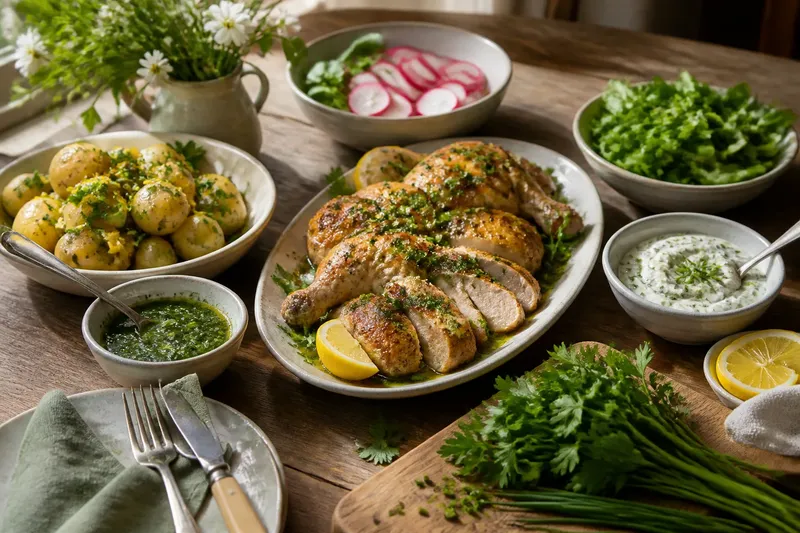
A bunch of parsley on the cutting board can give a spring supper its direction. For a spring supper built around fresh herbs, choose one lead flavor, pair it with familiar dishes, and add most of the leaves close to serving.
Treat the herb as a thread through the meal, not a garnish scattered everywhere. It might shape a warm sauce, brighten a side dish, or sit in a small bowl for the table. Let diners recognize it without making every plate taste the same.
Which herb should lead the supper?
Choose leaves that look lively and have a distinct aroma. Tender herbs suit spring meals, especially when the rest of the menu is comforting enough for a cool evening.
- Parsley: Clean and grassy, it works in chopped sauces and as a finish for potatoes, eggs, fish, or beans.
- Chives: Gently oniony, they pair well with butter, sour cream, eggs, mild cheese, and tender vegetables.
- Mint: Cool and fragrant, it complements peas, radishes, lamb, yogurt, and vinegar.
- Dill: Feathery and aromatic, it sits naturally alongside potatoes, cucumbers, fish, and cultured dairy.
- Cilantro: Bright and citrusy, it suits lime, tender greens, beans, and warm spices.
Give one herb the leading role. Others can support it in small amounts, but several competing aromas may blur the flavor you want to notice. If the leaves are limp or dull-smelling, pick another bunch rather than building the menu around them.
Use clean, tender stems in sauces or dressings. Remove tough stems before chopping leaves for a delicate finish.
How do you build a menu around the herb?
Start with a main dish that is mild or complementary. Add one filling side and one crisp or tangy element. That simple shape leaves room for the herb without making supper feel like a tasting exercise.
Say you have roasted chicken and new potatoes. Chop parsley with lemon zest and olive oil, spoon some over the chicken, and fold the rest through the potatoes. The expected result is a familiar supper with a clear green note. Add a plain salad or sliced radishes rather than another elaborate herb mixture.
Other useful pairings include:
- Chives: Serve an omelet or baked fish with buttered potatoes and sour cream stirred with chives.
- Mint: Pair peas and lamb with cucumber yogurt; keep the other side plain, such as bread or potatoes.
- Dill: Serve roasted salmon or a savory tart with potatoes and a lightly dressed cucumber salad.
- Cilantro: Build around beans or roasted vegetables, with warm tortillas or rice and lime wedges.
Adjust the herb’s prominence to the main dish. If that dish already has a bold sauce, keep the herb’s second appearance quiet. If it is plain, a brighter dressing or finishing spoonful can carry more of the flavor.
What should the other flavors do?
Give the lead herb a small supporting cast. Salt can bring its flavor forward; butter, olive oil, yogurt, or cream can carry its aroma; lemon, vinegar, or tart dairy can sharpen the overall impression. Add these gradually and taste as you go.
Match the support to the herb. Chives often suit butter or sour cream, while mint works with yogurt or a little vinegar. Parsley welcomes lemon and olive oil; dill pairs comfortably with cultured dairy; cilantro can meet lime and a modest amount of chile or toasted spice.
Strong flavors need a deliberate hand. A heavily spiced main dish, sweet glaze, assertive cheese, or pungent sauce can compete with tender herbs. Use less spice, skip an extra strong garnish, or move the herb to a cooling side dish.
Texture matters, too. A soft herb sauce feels lively beside crisp radishes or a browned crust. Delicate leaves can disappear in dense, creamy food, so add them just before serving.
When should you add the herbs?
Tender leaves often lose their fresh edge under prolonged heat. Save most of the lead herb for the end of cooking, though a small amount can go into a warm dish earlier.
Wash the herbs when you are ready to use them, then dry them well. Excess water can thin a dressing and make chopped leaves clump. A clean kitchen towel or salad spinner helps; handle delicate leaves gently and chop them with a sharp knife.
Cook the parts that can wait first: roast the vegetables, boil the potatoes, and set out the serving dishes. Chop the herbs near mealtime for a brighter aroma. Keep a few whole leaves aside if you want a simple garnish.
For a warm sauce, stir the herbs in after taking the pan off the heat. For salad or a cold dairy mixture, fold them in shortly before serving. Taste again, then decide whether a pinch of salt or a squeeze of lemon would bring the flavor into focus.
How can the table stay simple?
A main dish, a filling side, and a crisp or cool accompaniment are often enough. Serve the lead herb in one visible form, such as a small sauce bowl, a spoonful over potatoes, or herbs folded into yogurt. Let the other dishes stay quiet.
Keep garnishes purposeful. Chive lengths on an omelet help signal the flavor; a tangle of herbs, citrus curls, and edible flowers may distract from the food. Put extra sauce on the table so diners can choose how much they want.
A serving spoon, a bowl of radishes, or a loaf of bread can complete the table without introducing another strong flavor. Give the herb room, and the meal will feel composed rather than busy.
What questions help settle the menu?
Can two herbs share the lead?
They can, but keep each one easy to identify. Let parsley shape a sauce and use mint sparingly in a side dish instead of mixing both into every component.
What if the herb tastes stronger than expected?
Use less in the main dish and offer the rest separately. Plain potatoes, grains, or bread can soften a bold herb sauce at the table.
Can dried herbs stand in for fresh ones?
Dried herbs have a more concentrated, less leafy character, so they will not give the same springtime effect. If fresh leaves are unavailable, choose a menu suited to the dried herb and use a fresh element such as lemon or tender greens for contrast.
How should you store unused fresh herbs?
Storage applies to leaves you have not chopped or added to the meal. Keep those unused leaves clean and dry, wrap them loosely in a towel, and place them in a container in the refrigerator; check them before using. If you have chopped more than you need, put the extra in a small covered container and use it soon in a sauce or yogurt rather than wrapping it as though it were whole leaves.
What should you check before serving?
Look at the menu as a whole: one lead herb, a compatible main dish, a satisfying side, and a crisp or bright counterpoint. If every dish has its own sauce or garnish, remove one. If the herb appears only as an invisible pinch, add a fresh spoonful where diners can see and taste it.
For a spring supper built around fresh herbs, keep the timing clear: cook first, chop the leaves you plan to serve near mealtime, and refrigerate only the clean, dry leaves that remain uncut. A small bowl of fresh sauce can then go straight from the kitchen to the table.